
13939063851
13939063851
Five models, one job: turning water into blocks heavy enough to stack, load and ship. The freeze is direct — water sits against the cold metal itself, not in a bath of salt water — so there is no brine to mix and no salt to buy.
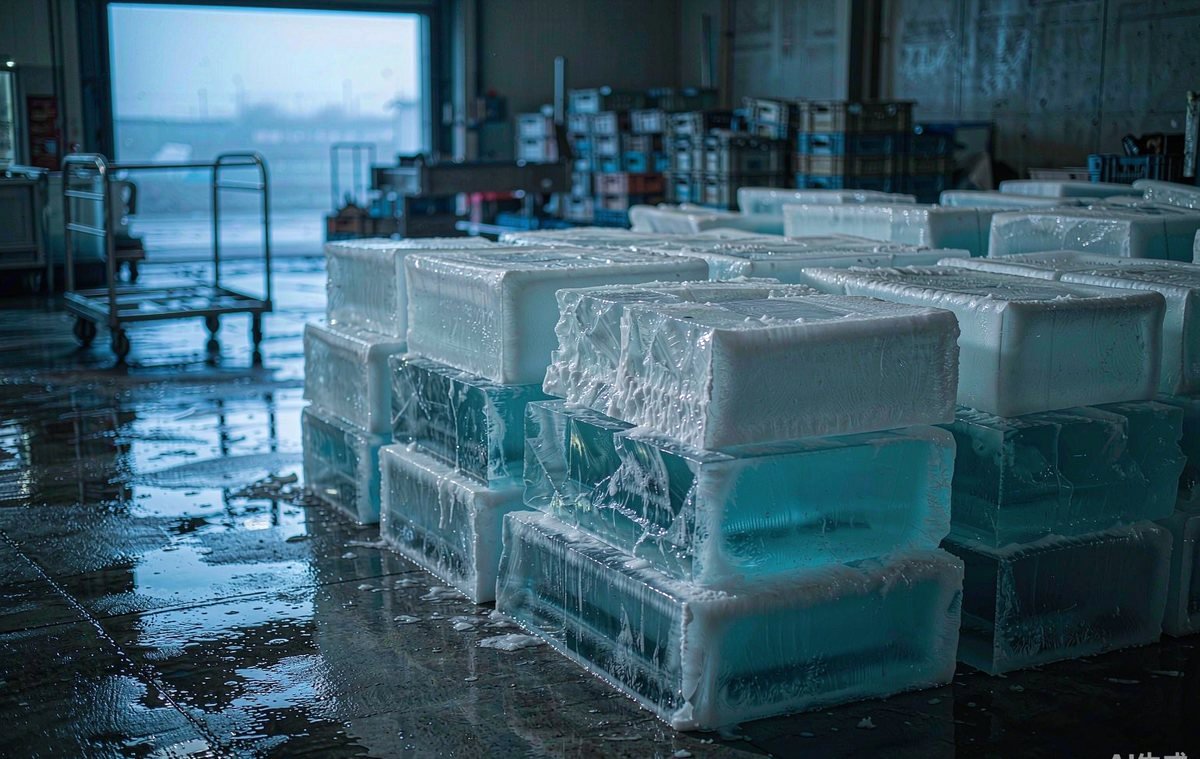
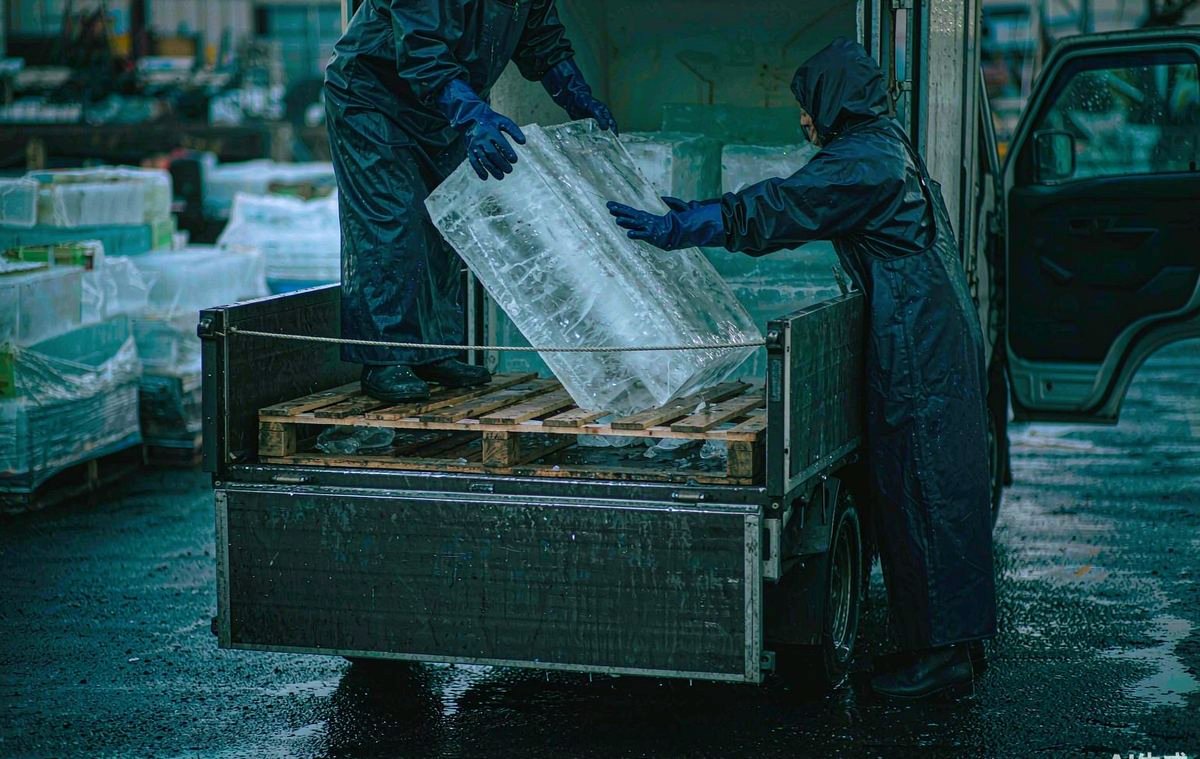
It comes out dense and hard, so it does not turn to slush in the back of a truck. For a plant selling ice by weight, that is the whole point: less melt on the way to the buyer, fewer trips, longer storage.
A block holds its weight for hours in an open truck, a fish hold or a market stall.
It survives being hooked, dropped and stacked — the block does not break up in handling.
It stacks floor to ceiling in a cold store, and moves with a trolley, a hook or two pairs of hands.
The can sets the weight and the freeze time sets the thickness. Ask for the block your market actually buys — 20, 25, 50 or 100 kg — and the machine is set to it before it ships.
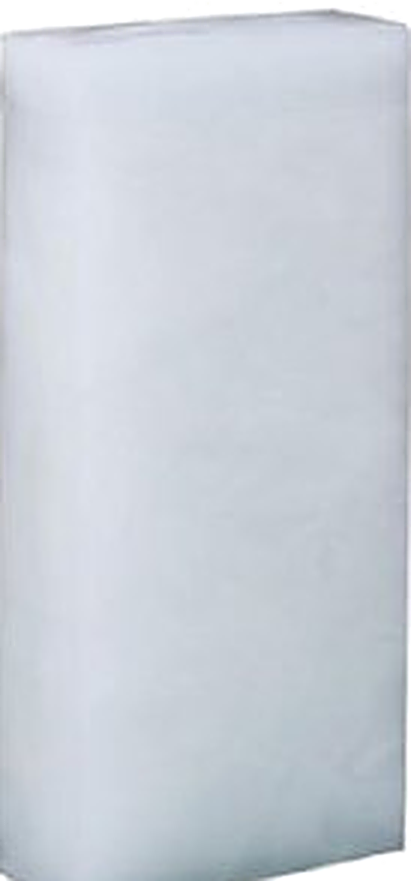
20 of these fill a 2 t day
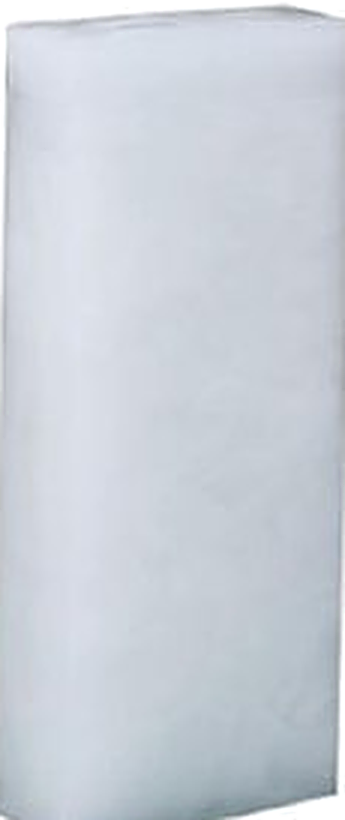
40 of these fill a 2 t day
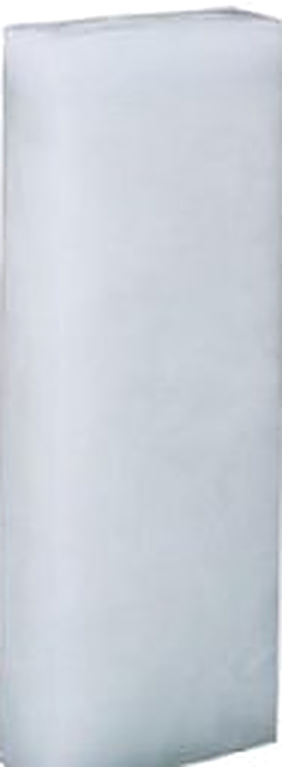
80 of these fill a 2 t day
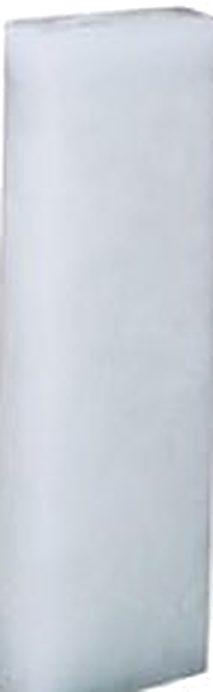
100 of these fill a 2 t day
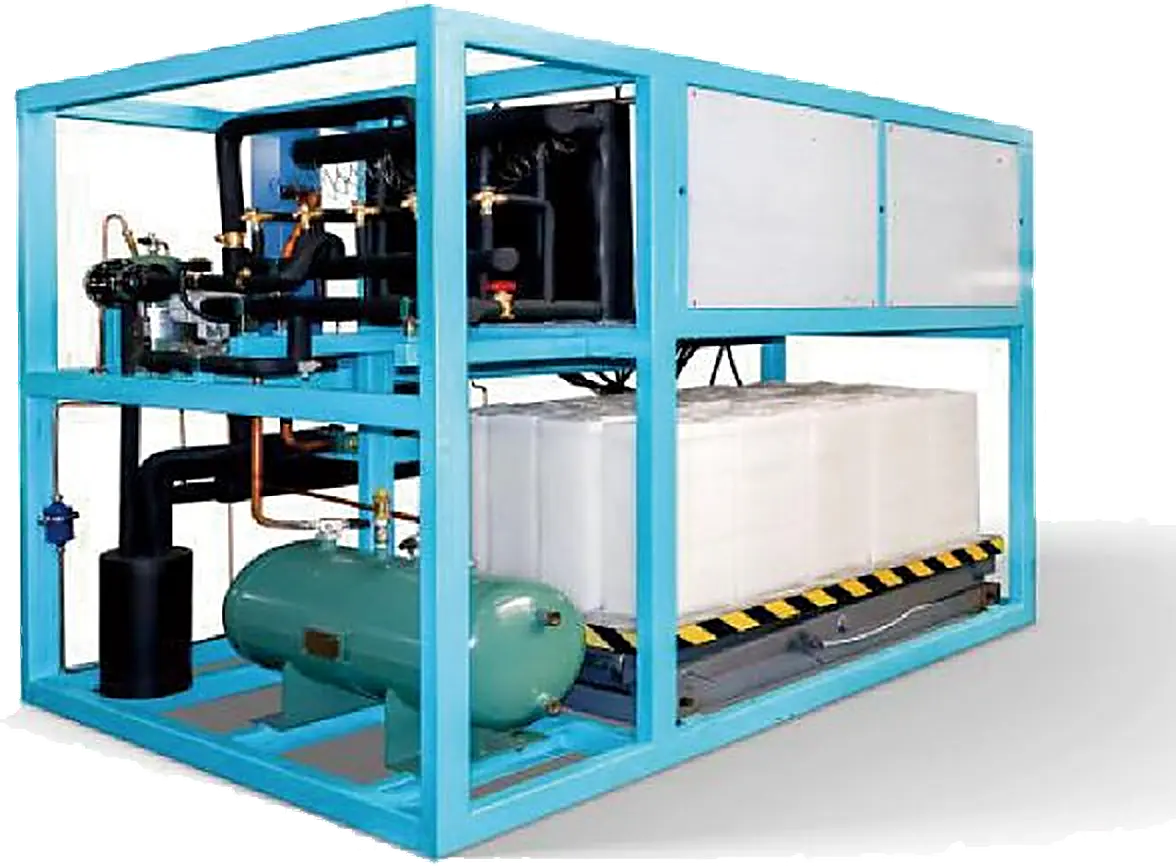
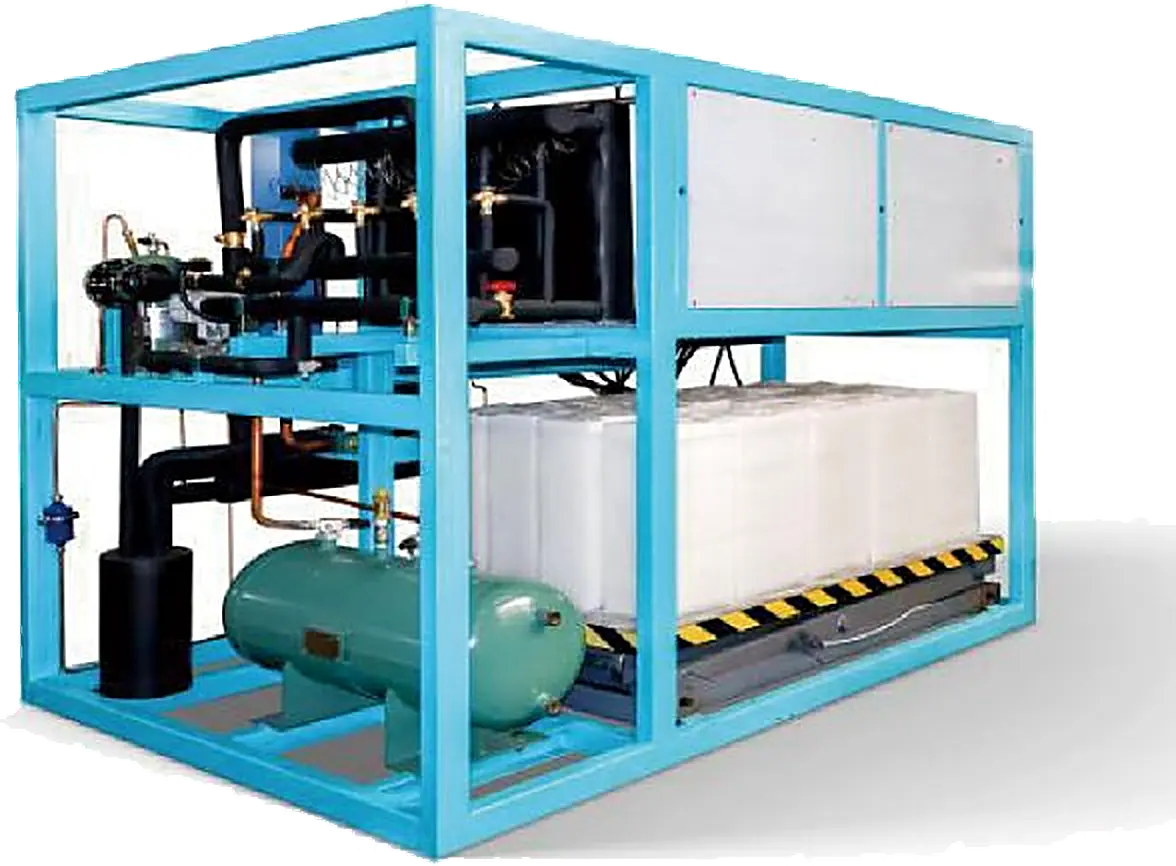
Cans, compressor, receiver, drain tray and control panel sit in one steel skid. Nothing here is complicated on purpose — it is built to run a shift, not to need a technician standing next to it.
The can is the evaporator surface. Heat leaves the block straight into the refrigerant, so the freeze starts at the wall and works inward.
Weight comes from the can, thickness from the freeze time. Change the block when your market changes, without changing the machine.
Because the heat path is short and direct, a block forms in a short time — you are not waiting on a tank of water to come down with it.
One refrigerant, R404A, on all five models. The system is set to hold its condition rather than swing between pull-down and idle.
The skid is placed in one piece, shimmed level, then connected to power and water. No site assembly of the refrigeration circuit.
Dense blocks resist melting and handling damage, which is what makes block ice worth moving 50 km to a buyer.
On a brine machine the cans stand in salt water that has to be cooled, mixed and kept at strength. Here the water freezes against the cooling surface itself. Fewer parts, less floor space, and nothing to top up between shifts.
Block ice is bought by people who need cold that lasts longer than the trip. These are the five places this machine ends up.
| Model | Output / 24 h | Cooling capacity | Cooling method | Voltage / current / power | Refrigerant | Compressor | Deicing | Dimensions (mm) |
|---|---|---|---|---|---|---|---|---|
| BMB20 | 2,000 kg | 14,000 W | Air / water | 220 V / 14.3 A / 7,700 W | R404A | 6,430 W | −8 °C | 4,150 × 1,650 × 2,480 |
| BMB30 | 3,000 kg | 21,500 W | Air / water | 220 V / 21.4 A / 11,000 W | R404A | 9,740 W | −8 °C | 5,000 × 1,800 × 2,480 |
| BMB50 | 5,000 kg | 35,900 W | Air / water | 220 V / 35.9 A / 18,000 W | R404A | 16,200 W | −8 °C | 5,700 × 2,200 × 2,480 |
| BMB80 | 8,000 kg | 56,700 W | Water / evaporative | 220 V / 61.4 A / 30,700 W | R404A | 27,000 W | −8 °C | 6,300 × 2,200 × 2,480 |
| BMB100T | 10,000 kg | 77,300 W | Water / evaporative | 220 V / 75 A / 37,500 W | R404A | 33,700 W | −8 °C | 6,450 × 2,360 × 2,530 |
If your question is not here, send it on WhatsApp. Sizing questions usually get an answer the same day.
Start from the ice you actually sell, then add what melts in store and what you keep for the next morning. Size the machine on your busiest day, not your average one — the table gives output per 24 hours for each model.
The can sets the weight and the freeze time sets the thickness. Blocks come in 20, 25, 50 and 100 kg; tell us which one your market buys and the cans are set to it before shipment.
No. This is a direct cooling machine: water freezes against the cooling surface itself. There is no brine bath to mix, no salt to store and no brine pump in the circuit.
That is how the two largest models are listed: BMB80 and BMB100T are water or evaporative cooled, while BMB20 to BMB50 run air or water. If you are choosing between them, tell us what water is available on site.
The voltage, current and connected power for each model are in the table — 220 V / 14.3 A / 7,700 W on the BMB20, up to 220 V / 75 A / 37,500 W on the BMB100T. Give the nameplate current to your electrician: cable and breaker are sized on the amps, not the tonnage.
The skid is 4,150 mm to 6,450 mm long and 1,650 mm to 2,360 mm wide, and it is placed as one piece. Measure the gate, the aisle and the turning space before you order.
即刻联系我们 快速回复