Bubble-free, clump-free ice
Crystal-clear crescents with no trapped air. Because the pieces will not stick to one another, the bin stays workable right down to the last scoop.

13939063851
Clear half-moon ice with no bubbles and no clumping — the shape that chills a drink quickly, then holds. Flow-type double-sided freezing fills the bin on less water and power, and the stainless freezing plate takes hard water in its stride.
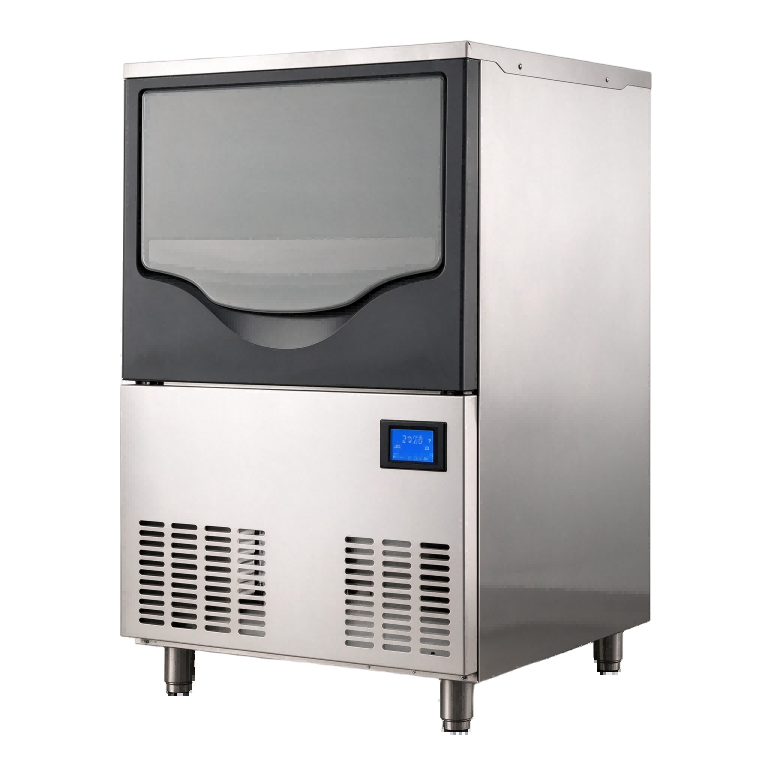 No bubbles · no clumping
Double-sided freezing
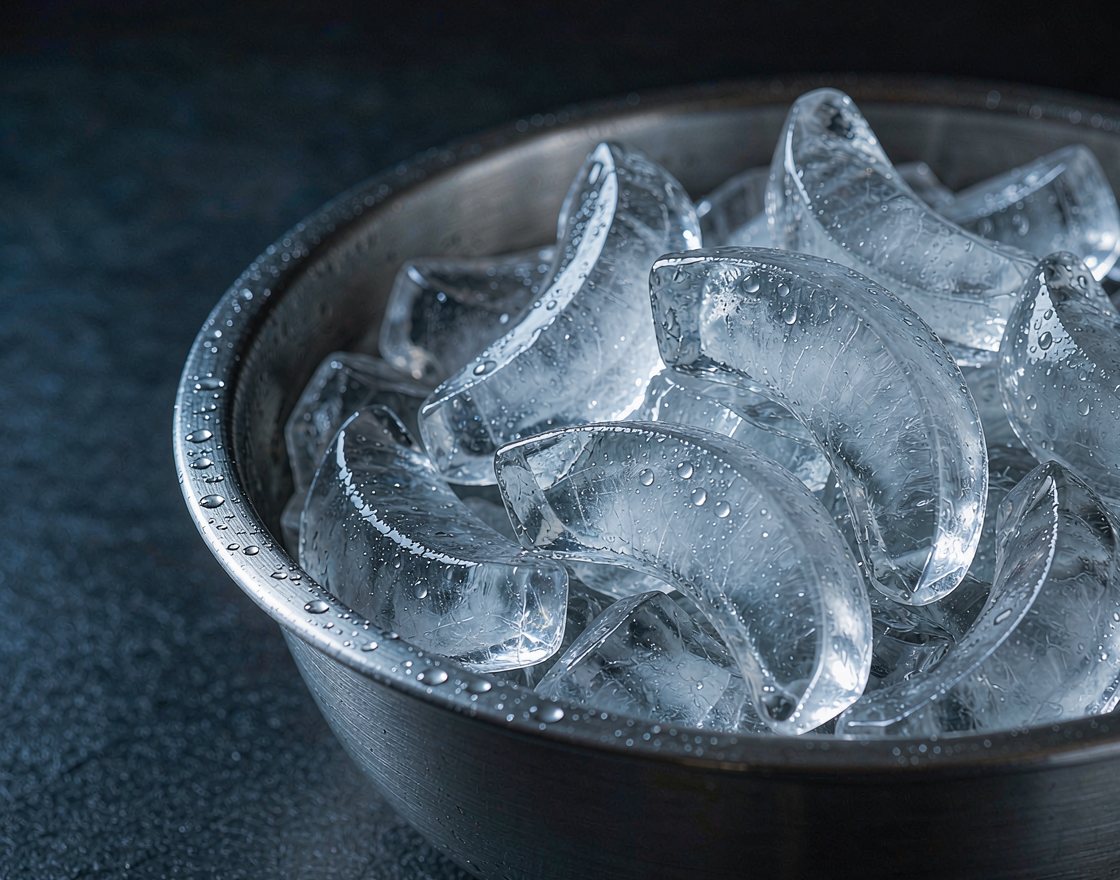
A crescent has a small contact patch against the drink and a large clear body. That single geometry is why a bar wants it: quick pull-down at the start of the drink, slow release after that, and pieces that nest in the bin instead of fighting for space.
The curved face chills quickly and then melts slowly, so a cocktail or soft drink stays as it was poured instead of turning watery in ten minutes.
Crescents nest into each other, so the same bin volume stores more usable ice — a real gain when the bin is your buffer between deliveries.
Ice made without bubbles does not weld itself into a block. Scoops come out clean at the busiest hour, with nothing to break up first.
The FL crescent range is built around one freezing plate, one control board and a water path that meets food-grade standards — then scaled from 90 kg to 450 kg a day.
Crystal-clear crescents with no trapped air. Because the pieces will not stick to one another, the bin stays workable right down to the last scoop.
One pass of water freezes on both faces of the plate at once. Two faces of ice per cycle means more output from the same water and the same electricity.
The ice plate is stainless steel, not coated. Hard water does not corrode it and scale has a harder time taking hold, so maintenance stays low in hard-water cities.
Double-sided freezing cuts how often the compressor has to cool down and defrost again. Fewer start-and-stop cycles is the simplest way to add years to its life.
An on-board controller runs the sequence and reports faults as they happen, which makes servicing faster and keeps output steady across a long shift.
Inner tank, water tank and distribution pipes are food-grade stainless. The bin itself is PE rotomoulded in one piece and foamed with polyurethane, so stored ice stays stored.
Pick by the ice you need on a peak day, then by how you can get rid of the heat. Both ranges share the same plate, board and stainless water path.
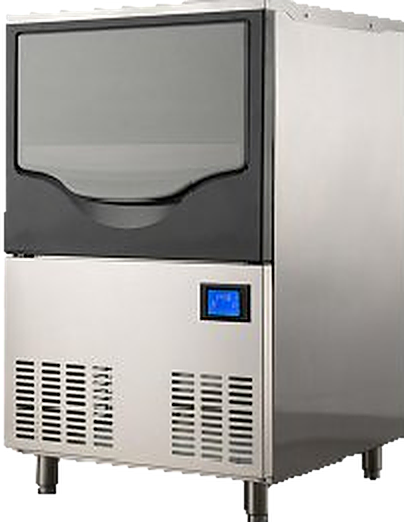
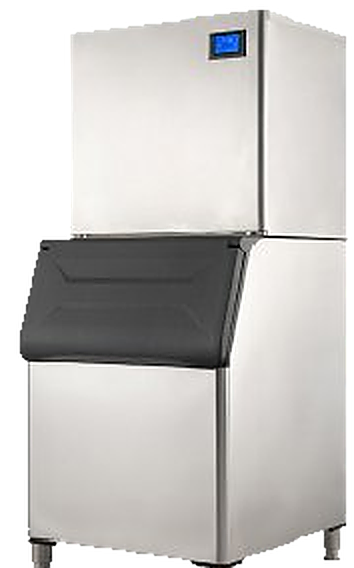
In a hard-water city, most ice machines lose output long before they break — scale builds on the evaporator and every cycle gets slower. A stainless freezing plate gives that process far less to hold on to.
Output, bin capacity, cooling method, power draw, refrigerant, net weight and cabinet size — the figures an installer asks for before anything is ordered.
Send your peak-day ice need and the water and power available on site. We will narrow it to one model.
| Model | Daily output | Ice storage | Cooling method | Voltage / current / power | Refrigerant | Net weight | Dimensions W × D × H (mm) |
|---|---|---|---|---|---|---|---|
| FL-200 | 90 kg | 50 kg | Air | 220V / 2.8A / 620W | R404A | 65 kg | 660 × 680 × 1050 |
| FL-280 | 120 kg | 50 kg | Air | 220V / 3A / 660W | R404A | 66 kg | 660 × 680 × 1050 |
| FL-400 | 180 kg | 120 kg | Water | 220V / 5.8A / 1280W | R404A | 83 kg | 560 × 850 × 1780 |
| FL-600 | 300 kg | 200 kg | Water | 220V / 6A / 1320W | R404A | 101 kg | 760 × 850 × 1780 |
| FL-700 | 320 kg | 200 kg | Water | 220V / 6.2A / 1350W | R404A | 107 kg | 760 × 850 × 1780 |
| FL-800 | 400 kg | 200 kg | Water | 220V / 7.5A / 1650W | R404A | 111 kg | 760 × 850 × 1850 |
| FL-1000 | 450 kg | 200 kg | Water | 220V / 8.5A / 1860W | R404A | 129 kg | 760 × 850 × 1850 |
Dimensions are width × depth × height in millimetres. Output and storage figures follow the manufacturer’s published data for each model. Specifications may be revised without notice — the data on your quotation is what applies to your order.
All service points sit on the rear panel. Air-cooled units need room to breathe; water-cooled units need a condenser feed and a drain instead.
The whole range runs on 220V single phase between 2.8A and 8.5A. Size the circuit to the amps shown for the model you order.
An ice-making water inlet feeds the freezing plate. Water-cooled models add a separate condenser water inlet beside it.
Ice-making water drain and the ice-release outlet run to waste; water-cooled models also need a condenser water drain.
FL-200 and FL-280 reject heat into the room through the front grilles — keep that side open and the cabinet level on its legs.
Anywhere a drink is served in glass and appearance matters — plus the cold rooms, labs and counters where ice is working stock rather than garnish.
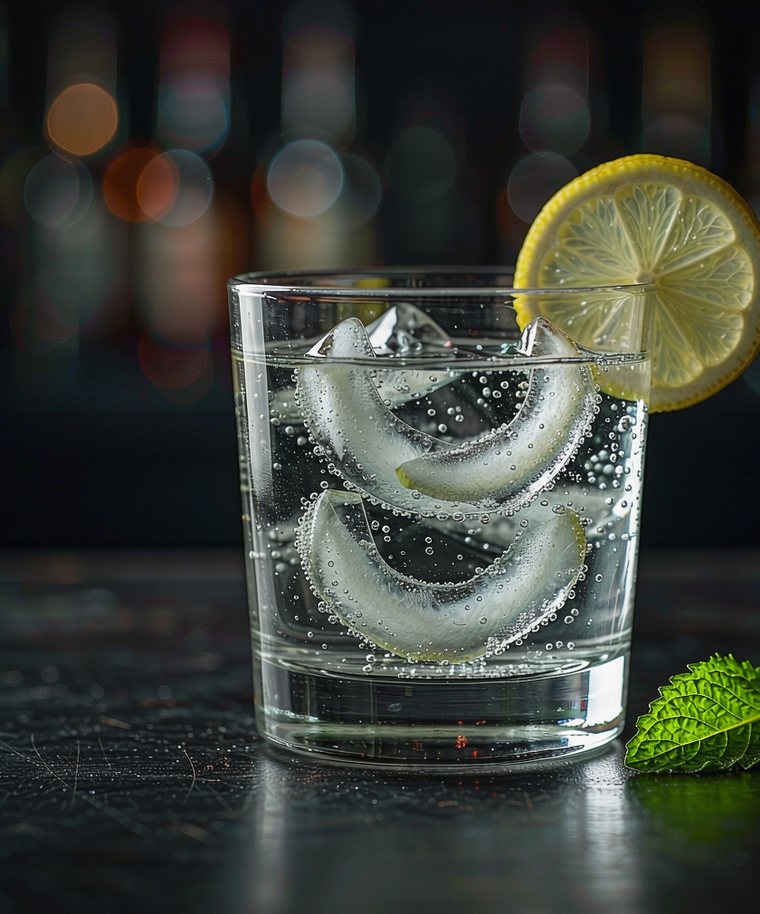
A crescent presents a large clear face to the customer and a small contact patch to the drink, so it chills quickly and then melts slowly. It also stacks densely, which means a smaller bin holds more usable ice — and it replaces crushed and block ice without the waste those shapes carry.
FL-200 and FL-280 are air-cooled: simple to place, but they need open space in front of the grilles. FL-400 through FL-1000 are water-cooled, which suits small or hot rooms because the heat leaves with the water instead of the air.
Work from your busiest day, not the average. Add the ice served across peak hours to what you want left overnight. Bins run from 50 kg to 200 kg, so the storage figure decides how often someone has to be near the machine.
The freezing plate is stainless steel and is not affected by hard water, and scale finds less to grip on that surface. That keeps the machine closer to its rated output in hard-water areas and reduces how often it needs descaling.
All seven models use 220V single phase. Current ranges from 2.8A on the FL-200 to 8.5A on the FL-1000, with wattage between 620 W and 1860 W — every figure is listed in the table above.
The computer board runs the freeze and harvest sequence and reports faults, which shortens service calls. Day to day, the work is keeping the bin clean and the water connections sound — the stainless inner tank and distribution pipes are there to make that straightforward.
即刻联系我们 快速回复