
13939063851
13939063851
A complete garri processing plant covering dry sieving, washing, peeling, grating, dewatering, frying, sieving and packing. Built with capacity from small-scale to industrial output.
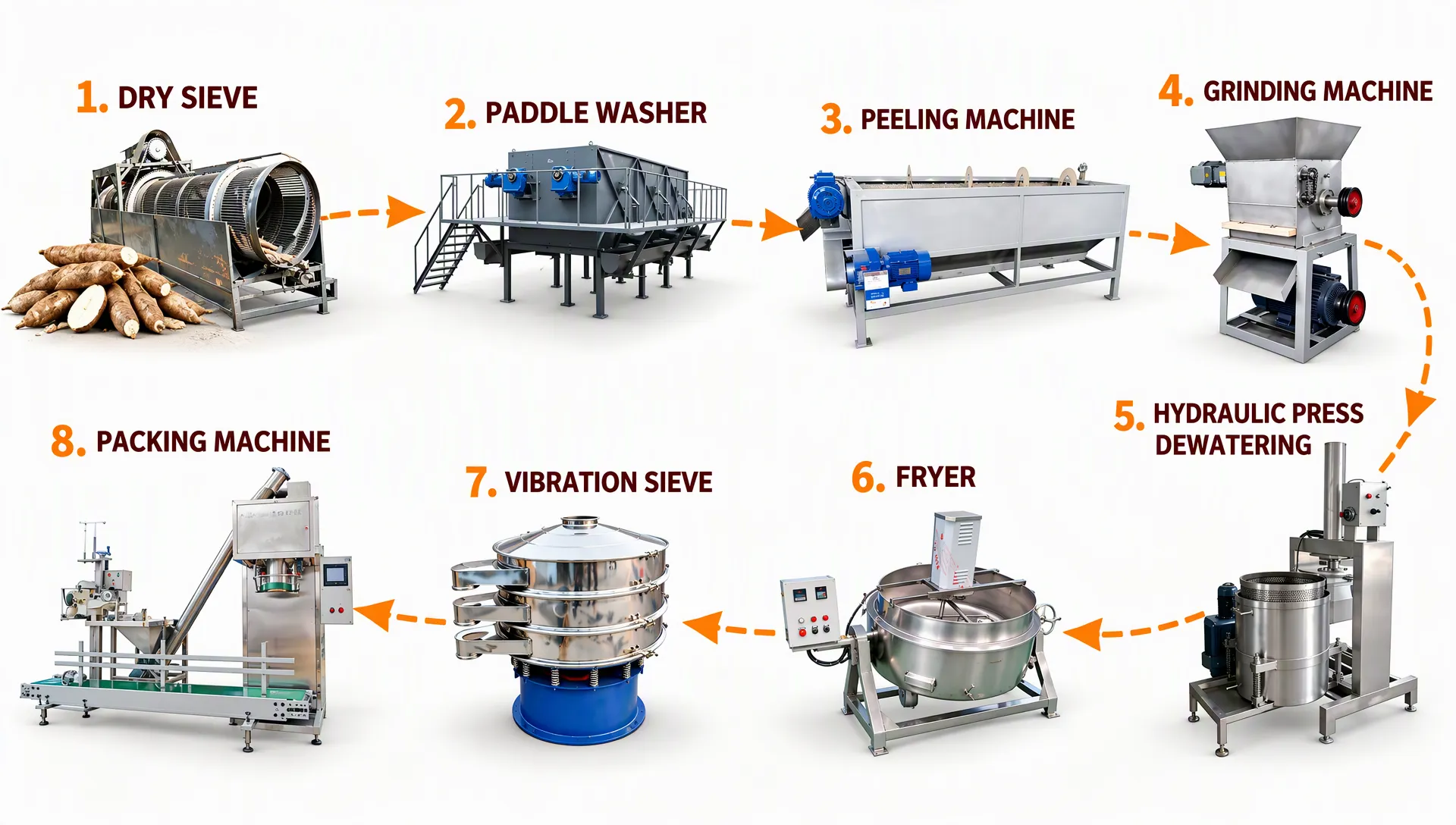
Garri is one of the most affordable carbohydrate staples across West and Central Africa. Yet traditional hand-processing is slow, wasteful and inconsistent — and it cannot meet modern food quality requirements.
Our mechanized garri processing line replaces manual peeling, grating and open-pan frying with stainless-steel equipment that lowers labor cost, stabilizes output and produces clean, evenly fried garri ready for bagging.
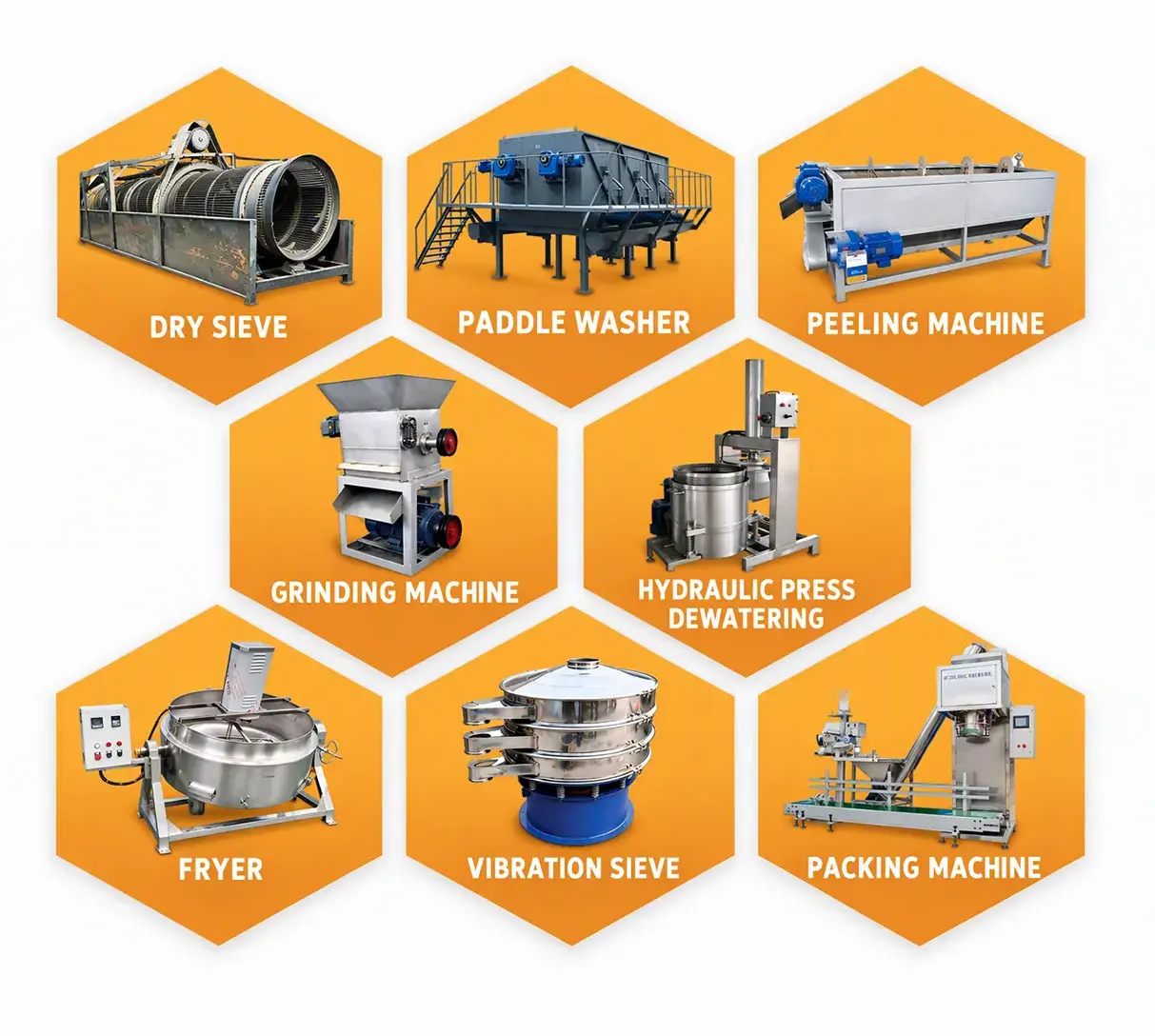
A standardized process chain designed for stable, repeatable quality.
Removes attached mud, stones and large particles without water, reducing downstream wear.
Washes away fine sand and surface dirt. Combined with dry sieving, it saves water and improves cleaning.
Removes the toxic cyanide-containing husk at over 95% peeling rate, clean and uniform.
Bidirectional grating crushes tubers into fine mash for higher garri yield.
Hydraulic press squeezes pulp to under 40% moisture, ready for frying.
Auto-stir fryer with temperature control, no sticking, even heat across the batch.
Vibration sieve grades garri by particle size; packing machine bags it quantitatively.
Clean, shelf-stable garri packed in bags, ready for local and regional markets.
Each unit is selected to match one stage of the process and can be upgraded as your output grows.
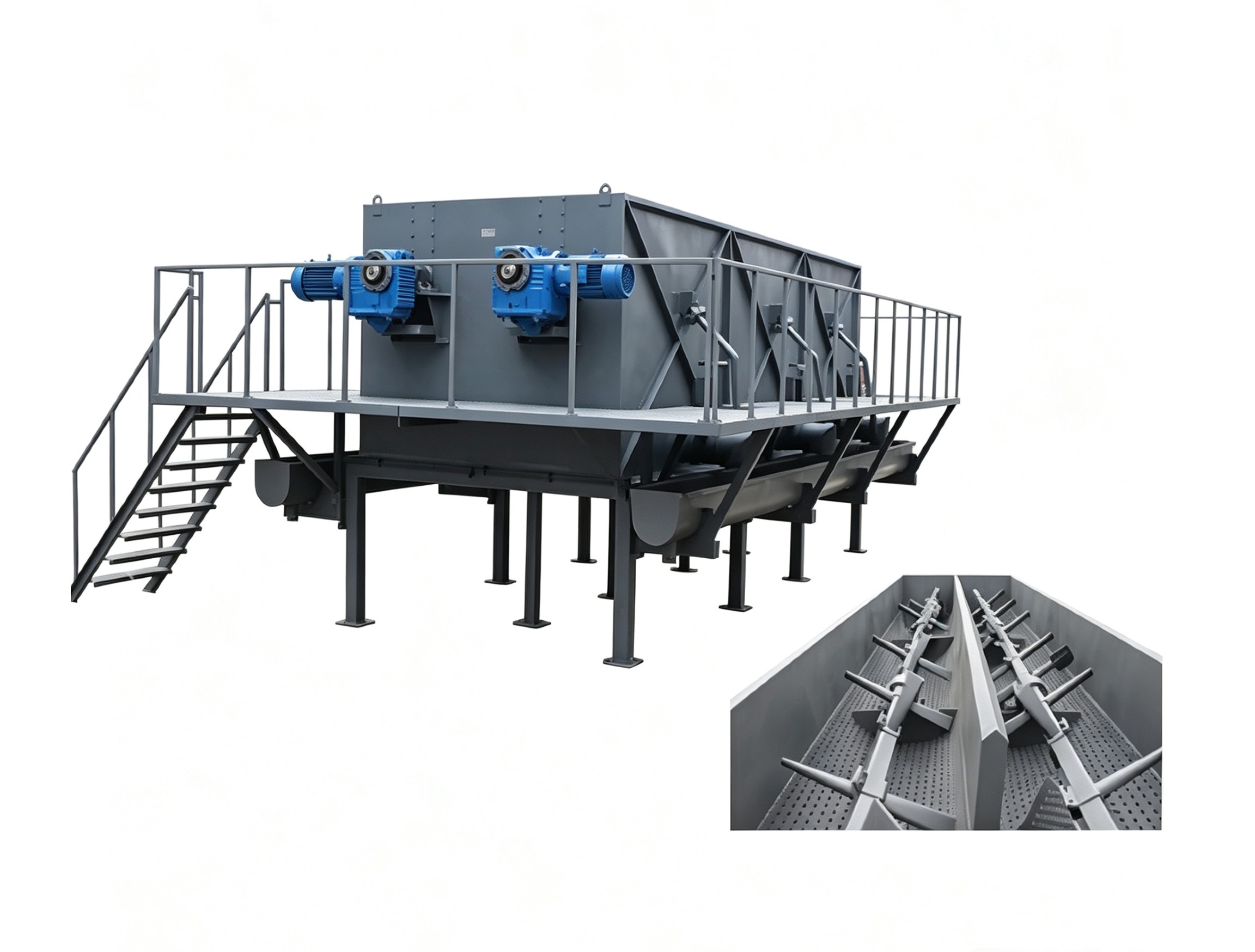
Dry sieve removes most mud and stones with no water; the paddle washer then scrubs fine sand and dirt off the tubers. The pair cuts water use and protects downstream machines.
Low water useLess wear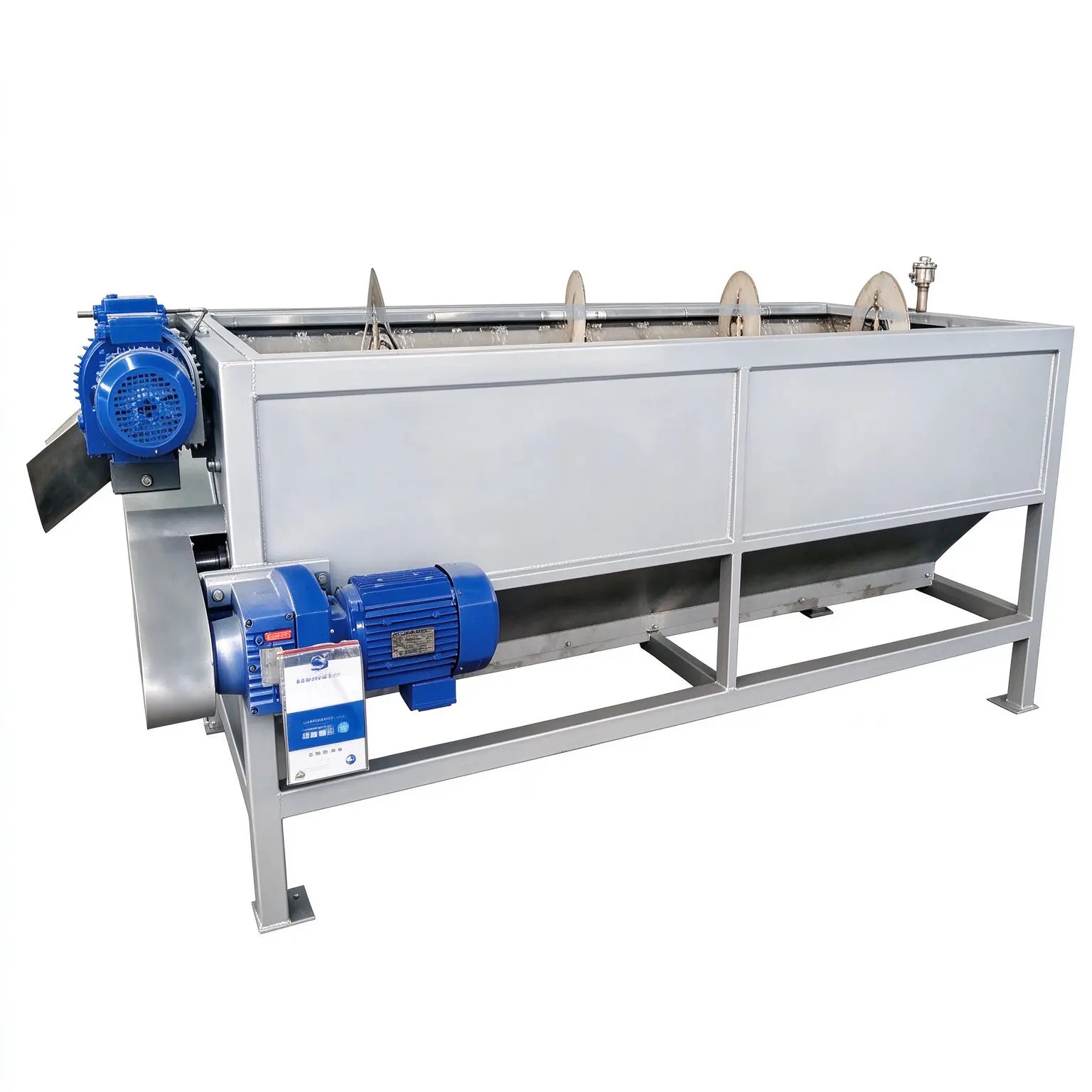
Removes the cyanide-containing husk that makes raw cassava unsafe. Over 95% peeling rate, high output, simple operation and clean peeled tubers — replacing slow manual labor.
>95% peel rateStainless contact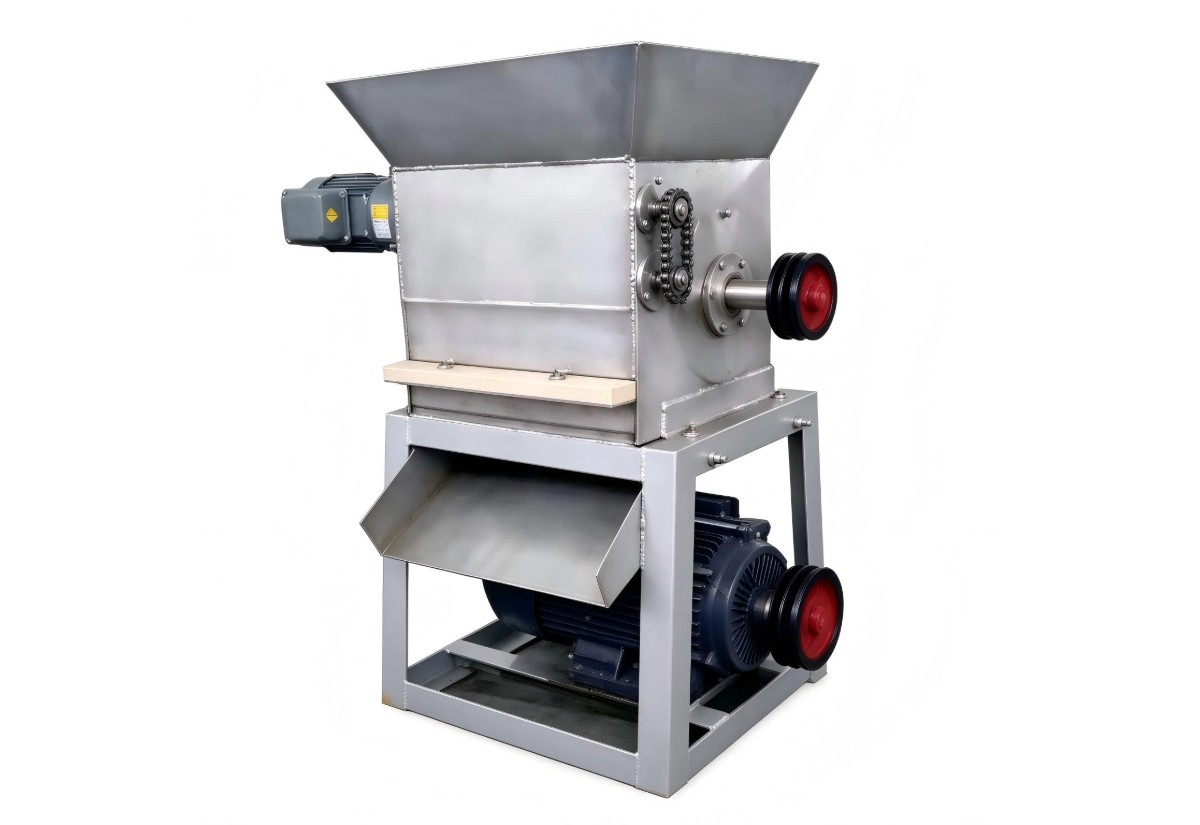
Bidirectional grating crushes tubers thoroughly into fine mash. Finer grating means higher garri yield, and all material-contact parts are stainless steel for product hygiene.
Bidirectional gratingHigher yield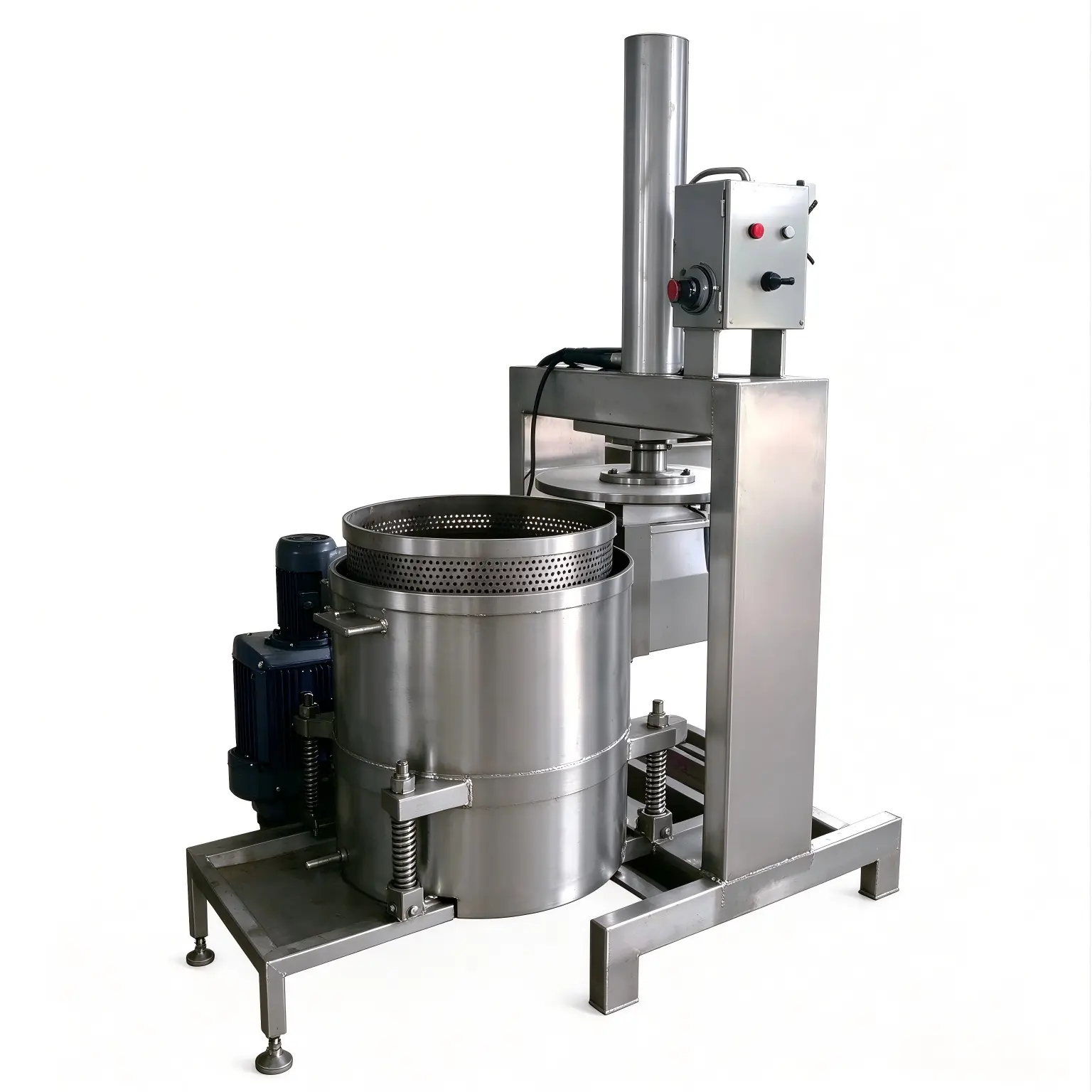
Uses hydraulic pressure to squeeze excess water out of the grated pulp, bringing moisture down to under 40% so the garri fryer works efficiently and evenly.
Moisture <40%Stainless interior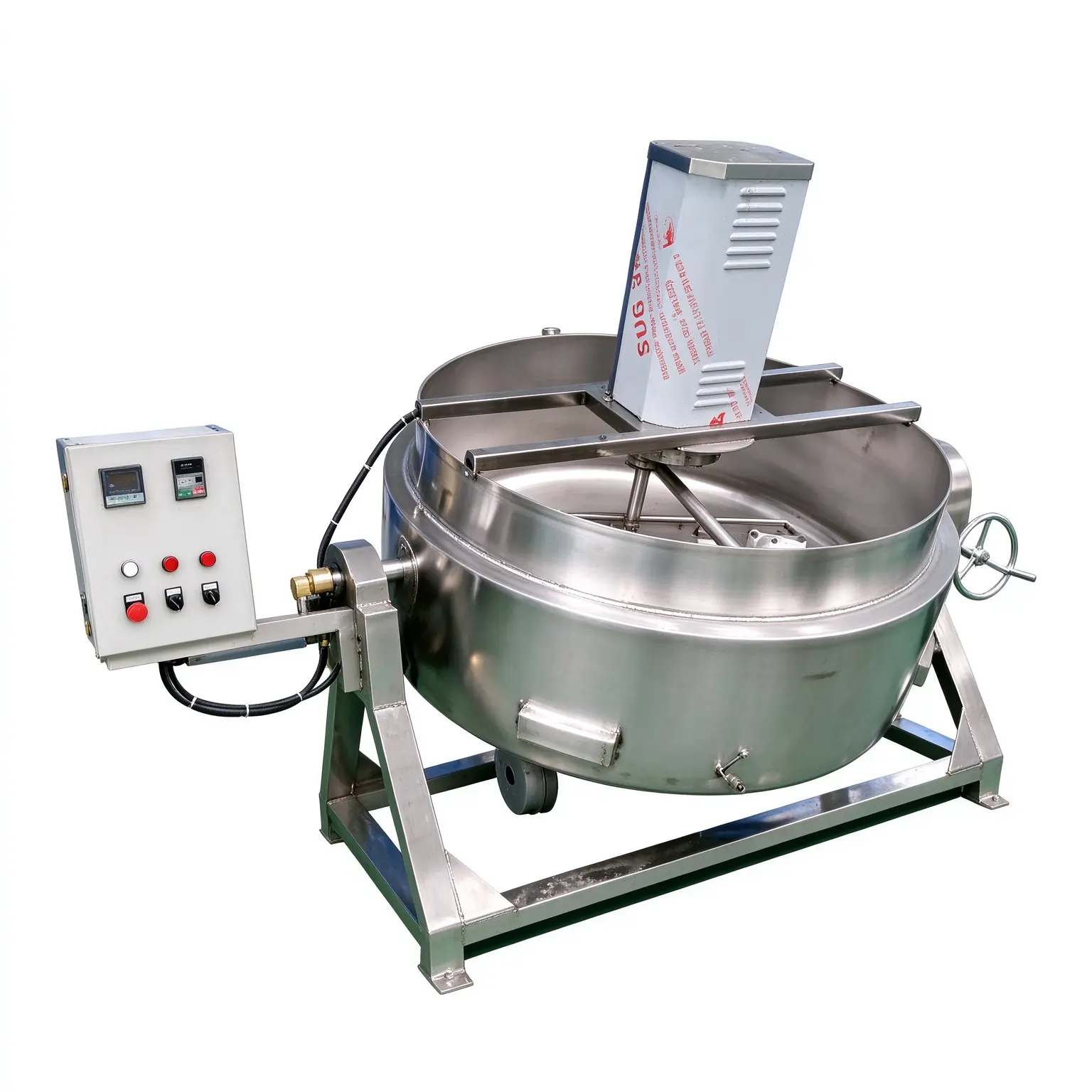
Auto-stir frying with built-in temperature control prevents over-gelatinization and sticking. Choose gas, oil or electric heating to match local fuel cost and availability.
Auto stirGas / Oil / Electric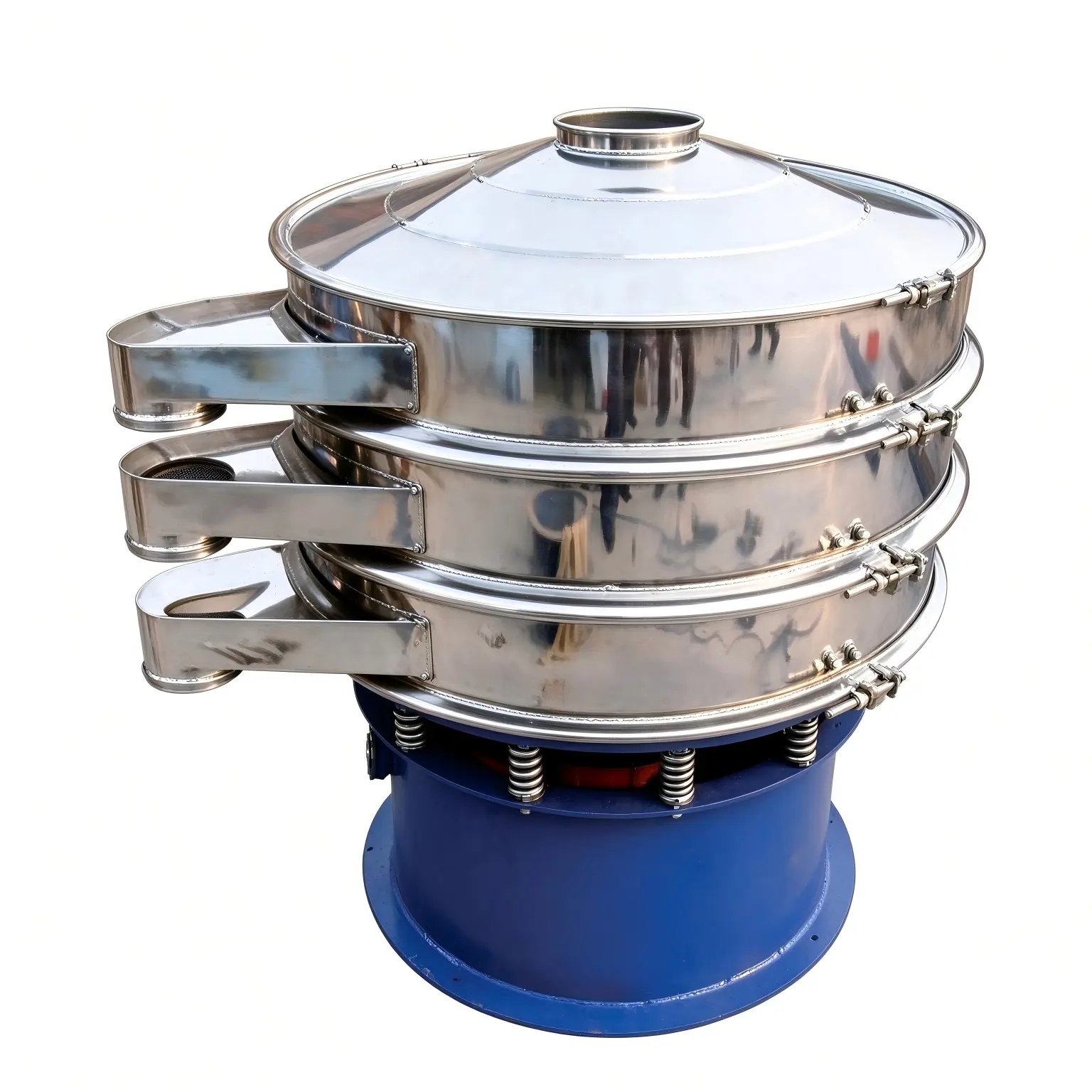
Sieves finished garri into the particle sizes your buyers want — high performance, low noise, continuous operation. The packing machine then bags the product quantitatively.
Graded sizesQuantitative packingStart small and expand later, or go industrial from day one. We customize the equipment list to your budget and output target.
| Configuration | Small Scale | Medium Scale | Complete / Industrial |
|---|---|---|---|
| Output capacity | 0.5–2 t/h | 3–6 t/h | 2–8 t/h |
| Core machines | Peeler, grater, hydraulic press, fryer, sieve | Cleaner, peeler, grater, press, fryer, sieve, packer | Dry sieve, washer, peeler, grater, press, fryer, sieve, packer |
| Investment level | Entry-level, fast payback | Growing operation | Large-scale commercial plant |
| Best fit for | New investors / limited budget | Estimated garri sellers scaling up | Industrial processors with steady cassava supply |
| Heating options | Gas / Oil / Electric | Gas / Oil / Electric | Gas / Oil / Electric |
| Material contact parts | Stainless steel | Stainless steel | Stainless steel |
Equipment list and floor plan are tailored to your budget, cassava supply and target output — not a one-size-fits-all package.
All parts touching cassava pulp and finished garri are stainless steel, protecting product hygiene and machine longevity.
Gas, oil or electric fryer heating lets you choose the most cost-effective fuel based on local market prices.
Mechanized peeling, grating and frying replace slow hand work, reducing labor dependence and raising daily output.
Start with the small line, then add cleaning, washing and packing machines as your business grows — no need to rebuild.
Proven design for West and Central African garri demand, where garri is a cheaper staple than rice or corn.
If you are new to garri processing or have a limited budget, start with the small-scale line (0.5–2 t/h). If you already have a steady cassava supply and an established buyer network, the medium (3–6 t/h) or complete industrial (2–8 t/h) line is more suitable.
In the small-scale process, grated cassava pulp is typically bagged and fermented for 2–3 days to develop garri flavor before dewatering. The exact fermentation step is integrated according to your local garri style and quality target.
We offer gas, oil and electric heating. Choose based on which fuel is cheapest and most reliable at your plant location — our engineer will help you estimate operating cost before you decide.
Yes. The equipment list, layout and capacity are customized based on your budget, raw cassava supply, plant dimensions and finished product requirements. Send us your situation and we will propose a matching configuration.
Send us your expected capacity and cassava supply — we will reply with a customized line configuration and free quotation.
即刻联系我们 快速回复